
Granit ialah sejenis batuan igneus yang digali kerana kekuatan, ketumpatan, ketahanan dan ketahanannya yang ekstrem terhadap kakisan. Tetapi granit juga sangat versatil – ia bukan sahaja untuk segi empat sama dan segi empat tepat! Malah, kami yakin dapat bekerjasama dengan komponen granit yang direka bentuk dalam bentuk, sudut dan lengkung semua variasi secara berkala—dengan hasil yang sangat baik.
Through our state of the art processing, cut surfaces can be exceptionally flat. These qualities make granite the ideal material to create custom-size and custom-design machine bases and metrology components. Granite is:
■ boleh dimesin
■ tepat rata apabila dipotong dan disiapkan
■ tahan karat
■ tahan lama
■ tahan lama
Komponen granit juga mudah dibersihkan. Apabila mencipta reka bentuk tersuai, pastikan anda memilih granit kerana kelebihannya yang unggul.
STANDARD / APLIKASI KEHAUSAN TINGGI
Granit yang digunakan oleh ZHHIMG untuk produk plat permukaan standard kami mempunyai kandungan kuarza yang tinggi, yang memberikan ketahanan yang lebih baik terhadap haus dan kerosakan. Warna Hitam Superior kami mempunyai kadar penyerapan air yang rendah, meminimumkan kemungkinan tolok ketepatan anda berkarat semasa diletakkan pada plat. Warna granit yang ditawarkan oleh ZHHIMG menghasilkan kurang silau, yang bermaksud kurang ketegangan mata bagi individu yang menggunakan plat. Kami telah memilih jenis granit kami sambil mempertimbangkan pengembangan haba dalam usaha untuk memastikan aspek ini minimum.
CUSTOM APPLICATIONS
Apabila aplikasi anda memerlukan plat dengan bentuk tersuai, sisipan berulir, slot atau pemesinan lain, anda perlu memilih bahan seperti Hitam Jinan Hitam. Bahan semula jadi ini menawarkan kekakuan yang unggul, peredam getaran yang sangat baik dan kebolehmesinan yang lebih baik.
Penting untuk diperhatikan bahawa warna sahaja bukanlah petunjuk kualiti fizikal batu tersebut. Secara amnya, warna granit berkaitan secara langsung dengan kehadiran atau ketiadaan mineral, yang mungkin tidak memberi kesan kepada kualiti yang membentuk bahan plat permukaan yang baik. Terdapat granit merah jambu, kelabu dan hitam yang sangat baik untuk plat permukaan, serta granit hitam, kelabu dan merah jambu yang sama sekali tidak sesuai untuk aplikasi ketepatan. Ciri-ciri kritikal granit, yang berkaitan dengan penggunaannya sebagai bahan plat permukaan, tidak ada kaitan dengan warna, dan adalah seperti berikut:
■ Kekakuan (pesongan di bawah beban - ditunjukkan oleh Modulus Keanjalan)
■ Kekerasan
■ Ketumpatan
■ Rintangan haus
■ Kestabilan
■ Keliangan
Kami telah menguji banyak bahan granit dan membandingkan bahan-bahan ini. Akhirnya kami mendapat keputusan, granit hitam Jinan adalah bahan terbaik yang pernah kami ketahui. Granit Hitam India dan granit Afrika Selatan serupa dengan Granit Hitam Jinan, tetapi sifat fizikalnya kurang daripada Granit Hitam Jinan. ZHHIMG akan terus mencari lebih banyak bahan granit di dunia dan membandingkan sifat fizikalnya.
Untuk berbincang lebih lanjut tentang granit yang sesuai untuk projek anda, sila hubungi kamiinfo@zhhimg.com.
Pengilang yang berbeza menggunakan piawaian yang berbeza. Terdapat banyak piawaian di dunia.
Piawaian DIN, ASME B89.3.7-2013 atau Spesifikasi Persekutuan GGG-P-463c (Plat Permukaan Granit) dan sebagainya sebagai asas untuk spesifikasi mereka.
Dan kami boleh mengeluarkan plat pemeriksaan ketepatan granit mengikut keperluan anda. Selamat datang untuk menghubungi kami jika anda ingin mengetahui lebih lanjut tentang lebih banyak piawaian.
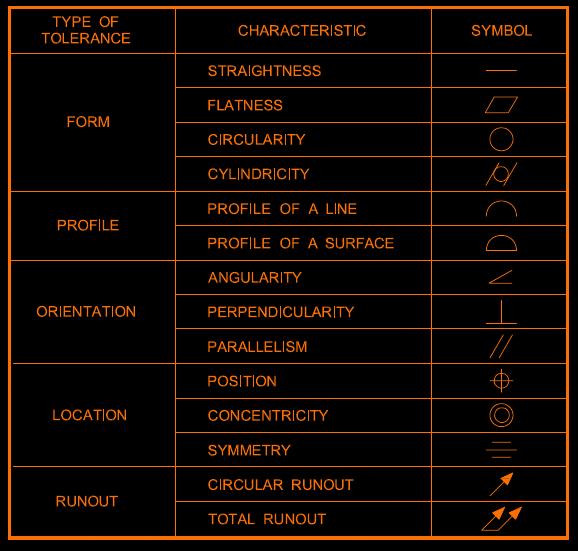
Kerataan boleh dianggap sebagai semua titik pada permukaan yang terkandung dalam dua satah selari, satah tapak dan satah bumbung. Pengukuran jarak antara satah ialah kerataan keseluruhan permukaan. Pengukuran kerataan ini biasanya mempunyai toleransi dan mungkin termasuk penetapan gred.
Contohnya, toleransi kerataan untuk tiga gred standard ditakrifkan dalam spesifikasi persekutuan seperti yang ditentukan oleh formula berikut:
■ Gred Makmal AA = (40 + pepenjuru kuasa dua/25) x .000001" (sepihak)
■ Gred Pemeriksaan A = Gred Makmal AA x 2
■ Bilik Alatan Gred B = Gred Makmal AA x 4.
Untuk plat permukaan bersaiz standard, kami menjamin toleransi kerataan yang melebihi keperluan spesifikasi ini. Selain kerataan, ASME B89.3.7-2013 & Spesifikasi Persekutuan GGG-P-463c menangani topik termasuk: ketepatan pengukuran ulangan, sifat bahan granit plat permukaan, kemasan permukaan, lokasi titik sokongan, kekakuan, kaedah pemeriksaan yang boleh diterima, pemasangan sisipan berulir, dsb.
Plat permukaan granit dan plat pemeriksaan granit ZHHIMG memenuhi atau melebihi semua keperluan yang ditetapkan dalam spesifikasi ini. Pada masa ini, tiada spesifikasi yang jelas untuk plat sudut granit, selari atau segi empat sama induk.
Dan anda boleh menemui formula untuk piawaian lain dalamMUAT TURUN.
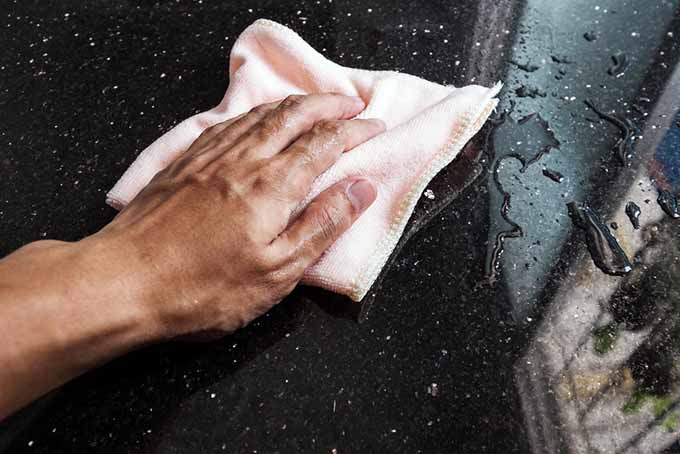
Pertama, adalah penting untuk memastikan plat bersih. Debu kasar bawaan udara biasanya merupakan sumber haus dan lusuh terbesar pada plat, kerana ia cenderung terbenam dalam benda kerja dan permukaan sentuhan tolok. Kedua, tutup plat anda untuk melindunginya daripada habuk dan kerosakan. Jangka hayat haus boleh dilanjutkan dengan menutup plat apabila tidak digunakan, dengan memutarkan plat secara berkala supaya satu kawasan tidak digunakan secara berlebihan, dan dengan menggantikan pad sentuh keluli pada tolok dengan pad karbida. Selain itu, elakkan meletakkan makanan atau minuman ringan di atas pinggan. Ambil perhatian bahawa banyak minuman ringan mengandungi sama ada asid karbonik atau fosforik, yang boleh melarutkan mineral yang lebih lembut dan meninggalkan lubang kecil di permukaan.
Ini bergantung pada cara plat digunakan. Jika boleh, kami mengesyorkan membersihkan plat pada awal hari (atau syif kerja) dan sekali lagi pada penghujungnya. Jika plat menjadi kotor, terutamanya dengan cecair berminyak atau melekit, ia mungkin perlu dibersihkan dengan segera.
Bersihkan plat secara berkala dengan cecair atau pembersih plat permukaan ZHHIMG Tanpa Air. Pemilihan larutan pembersih adalah penting. Jika pelarut meruap digunakan (aseton, pencair lakuer, alkohol, dll.), penyejatan akan menyejukkan permukaan dan memesongkannya. Dalam kes ini, adalah perlu untuk membiarkan plat menjadi normal sebelum menggunakannya atau ralat pengukuran akan berlaku.
Jumlah masa yang diperlukan untuk plat menjadi normal akan berbeza-beza mengikut saiz plat dan jumlah penyejukan. Satu jam sepatutnya mencukupi untuk plat yang lebih kecil. Dua jam mungkin diperlukan untuk plat yang lebih besar. Jika pembersih berasaskan air digunakan, akan terdapat juga sedikit penyejukan penyejatan.
Plat tersebut juga akan menakung air, dan ini boleh menyebabkan pengaratan bahagian logam yang bersentuhan dengan permukaan. Sesetengah pembersih juga akan meninggalkan sisa melekit selepas kering, yang akan menarik habuk bawaan udara, dan sebenarnya meningkatkan haus, dan bukannya mengurangkannya.
Ini bergantung pada penggunaan plat dan persekitaran. Kami mengesyorkan agar plat atau aksesori granit jitu baharu menjalani penentukuran semula penuh dalam tempoh satu tahun dari tarikh pembelian. Jika plat permukaan granit akan digunakan secara meluas, adalah dinasihatkan untuk memendekkan selang masa ini kepada enam bulan. Pemeriksaan bulanan untuk ralat pengukuran berulang menggunakan aras Elektronik atau peranti serupa akan menunjukkan sebarang bintik haus yang sedang berkembang dan hanya mengambil masa beberapa minit untuk dilaksanakan. Selepas keputusan penentukuran semula pertama ditentukan, selang penentukuran boleh dilanjutkan atau dipendekkan seperti yang dibenarkan atau dikehendaki oleh sistem kualiti dalaman anda.
Kami boleh menawarkan perkhidmatan untuk membantu anda memeriksa dan menentukur plat permukaan granit anda.

Terdapat beberapa kemungkinan penyebab variasi antara penentukuran:
- Permukaan telah dibasuh dengan larutan panas atau sejuk sebelum penentukuran, dan tidak diberi masa yang mencukupi untuk menormalkan
- Plat itu disokong dengan tidak betul
- Perubahan suhu
- Draf
- Cahaya matahari langsung atau haba sinaran lain pada permukaan plat. Pastikan pencahayaan atas tidak memanaskan permukaan
- Variasi dalam kecerunan suhu menegak antara musim sejuk dan musim panas (Jika boleh, ketahui suhu kecerunan menegak pada masa penentukuran dilakukan.)
- Plat tidak diberi masa yang mencukupi untuk dinormalkan selepas penghantaran
- Penggunaan peralatan pemeriksaan yang tidak betul atau penggunaan peralatan yang tidak dikalibrasi
- Perubahan permukaan akibat haus
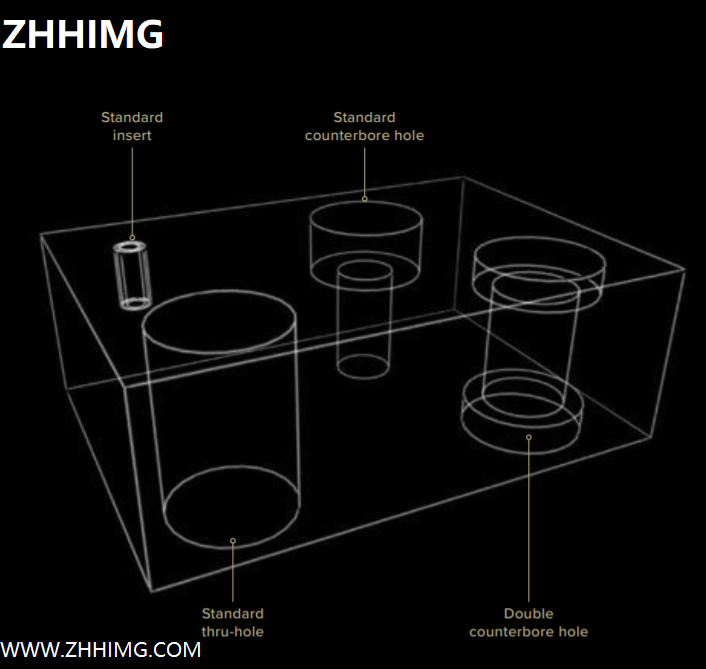
Berapa jenis lubang pada granit jitu?
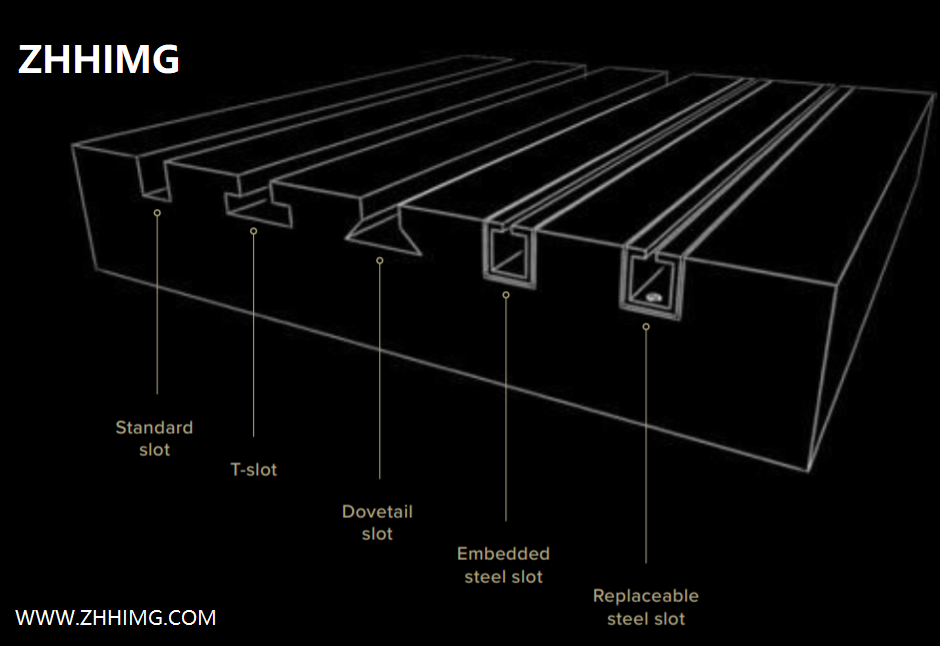
Slot pada Komponen Granit Ketepatan
Bagi kebanyakan kilang, bilik pemeriksaan dan makmal, plat permukaan granit jitu digunakan sebagai asas untuk pengukuran yang tepat. Oleh kerana setiap pengukuran linear bergantung pada permukaan rujukan yang tepat dari mana dimensi akhir diambil, plat permukaan menyediakan satah rujukan terbaik untuk pemeriksaan dan susun atur kerja sebelum pemesinan. Ia juga merupakan asas yang ideal untuk membuat pengukuran ketinggian dan mengukur permukaan. Tambahan pula, tahap kerataan, kestabilan, kualiti keseluruhan dan mutu kerja yang tinggi menjadikannya pilihan yang baik untuk memasang sistem pengukuran mekanikal, elektronik dan optik yang canggih. Bagi mana-mana proses pengukuran ini, adalah penting untuk memastikan plat permukaan dikalibrasi.
Repeat Measurements and Flatness
Kedua-dua ukuran kerataan dan pengulangan adalah penting untuk memastikan permukaan yang tepat. Kerataan boleh dianggap sebagai semua titik pada permukaan yang terkandung dalam dua satah selari, satah asas dan satah bumbung. Pengukuran jarak antara satah ialah kerataan keseluruhan permukaan. Pengukuran kerataan ini biasanya mempunyai toleransi dan mungkin termasuk penetapan gred.
The flatness tolerances for three standard grades are defined in the federal specification as determined by the following formula:
Piawaian DIN, Piawaian GB, Piawaian ASME, piawaian JJS... negara berbeza dengan pendirian yang berbeza...
Maklumat lanjut tentang piawaian.
In addition to flatness, repeatability must be ensured. A repeat measurement is a measurement of local flatness areas. It is a measurement taken anywhere on the surface of a plate that will repeat within the stated tolerance. Controlling local area flatness to a tighter tolerance than overall flatness guarantees a gradual change in surface flatness profile, thereby minimizing local errors.
Bagi memastikan plat permukaan memenuhi spesifikasi kerataan dan pengukuran berulang, pengeluar plat permukaan granit harus menggunakan Spesifikasi Persekutuan GGG-P-463c sebagai asas untuk spesifikasi mereka. Piawaian ini menangani ketepatan pengukuran berulang, sifat bahan granit plat permukaan, kemasan permukaan, lokasi titik sokongan, kekakuan, kaedah pemeriksaan yang boleh diterima dan pemasangan sisipan berulir.
Checking Plate Accuracy
Dengan mengikuti beberapa garis panduan mudah, pelaburan dalam plat permukaan granit sepatutnya bertahan selama bertahun-tahun. Bergantung pada penggunaan plat, persekitaran kedai dan ketepatan yang diperlukan, kekerapan pemeriksaan ketepatan plat permukaan berbeza-beza. Peraturan umum adalah plat baharu akan menerima penentukuran semula penuh dalam tempoh satu tahun selepas pembelian. Jika plat digunakan dengan kerap, adalah dinasihatkan untuk memendekkan selang masa ini kepada enam bulan.
Before a surface plate has worn beyond specification for overall flatness, it will show worn or wavy posts. Monthly inspection for repeat measurement errors using a repeat reading gage will identify wear spots. A repeat reading gage is a high-precision instrument that detects local error and can be displayed on a high magnification electronic amplifier.
An effective inspection program should include regular checks with an autocollimator, providing actual calibration of overall flatness traceable to National Institute of Standards and Technology (NIST). Comprehensive calibration by the manufacturer or an independent company is necessary from time to time.
Variations Between Calibrations
Dalam beberapa kes, terdapat variasi antara penentukuran plat permukaan. Kadangkala faktor seperti perubahan permukaan akibat haus, penggunaan peralatan pemeriksaan yang salah atau penggunaan peralatan yang tidak dikalibrasi boleh menyebabkan variasi ini. Walau bagaimanapun, dua faktor yang paling biasa ialah suhu dan sokongan.
One of the most important variables is temperature. For instance, the surface might have been washed with a hot or cold solution prior to calibration and not allowed sufficient time to normalize. Other causes of temperature change include drafts of cold or hot air, direct sunlight, overhead lighting or other sources of radiant heat on the surface of the plate.
There also can be variations in the vertical temperature gradient between winter and summer. In some cases, the plate is not allowed sufficient time to normalize after shipment. It is a good idea to record the vertical gradient temperature at the time the calibration is performed.
Another common cause for calibration variation is a plate that is improperly supported. A surface plate should be supported at three points, ideally located 20% of the length in from the ends of the plate. Two supports should be located 20% of the width in from the long sides, and the remaining support should be centered.
Only three points can rest solidly on anything but a precision surface. Attempting to support the plate at more than three points will cause the plate to receive its support from various combinations of three points, which will not be the same three points on which it was supported during production. This will introduce errors as the plate deflects to conform to the new support arrangement. Consider using steel stands with support beams designed to line up with the proper support points. Stands for this purpose are generally available from the surface plate manufacturer.
If the plate is properly supported, precise leveling is only necessary if an application specifies it. Leveling is not necessary to maintain the accuracy of a properly supported plate.
Extend Plate Life
Mengikuti beberapa garis panduan akan mengurangkan haus pada plat permukaan granit dan akhirnya, memanjangkan hayatnya.
Pertama, adalah penting untuk memastikan plat bersih. Debu kasar bawaan udara biasanya merupakan sumber haus dan lusuh terbesar pada plat, kerana ia cenderung terbenam dalam bahan kerja dan permukaan sentuhan tolok.
It also is important to cover plates to protect it from dust and damage. Wear life can be extended by covering the plate when not in use.
Putar plat secara berkala supaya satu kawasan sahaja tidak digunakan secara berlebihan. Selain itu, adalah disyorkan untuk menggantikan pad sentuh keluli pada tolok dengan pad karbida.
Avoid setting food or soft drinks on the plate. Many soft drinks contain either carbonic or phosphoric acid, which can dissolve the softer minerals and leave small pits in the surface.
Where to Relap
Apabila plat permukaan granit perlu dilapisi semula, pertimbangkan sama ada untuk menjalankan perkhidmatan ini di tapak atau di kemudahan penentukuran. Adalah lebih baik untuk plat dipasang semula di kilang atau kemudahan khusus. Walau bagaimanapun, jika plat tidak haus terlalu teruk, biasanya dalam lingkungan 0.001 inci daripada toleransi yang diperlukan, ia boleh dilapisi semula di tapak. Jika plat haus sehingga melebihi 0.001 inci daripada toleransi, atau jika ia berlubang atau terkoyak dengan teruk, maka ia harus dihantar ke kilang untuk digiling sebelum dipasang semula.
A calibration facility has the equipment and factory setting providing the optimum conditions for proper plate calibration and rework if necessary.
Berhati-hati harus diambil dalam memilih juruteknik penentukuran dan pelapisan semula di tapak. Minta akreditasi dan sahkan peralatan yang akan digunakan oleh juruteknik mempunyai penentukuran yang boleh dikesan. Pengalaman juga merupakan faktor penting, kerana memerlukan masa bertahun-tahun untuk mempelajari cara memasang granit tepat dengan betul.
Critical measurements start with a precision granite surface plate as a baseline. By ensuring a reliable reference by using a properly calibrated surface plate, manufacturers have one of the essential tools for reliable measurements and better quality parts.Q
Checklist for Calibration Variations
1. Permukaan telah dibasuh dengan larutan panas atau sejuk sebelum penentukuran dan tidak diberi masa yang mencukupi untuk menormalkan.
2. Plat itu disokong dengan tidak betul.
3. Perubahan suhu.
4. Draf.
5. Cahaya matahari langsung atau haba sinaran lain pada permukaan plat. Pastikan pencahayaan atas tidak memanaskan permukaan.
6. Variasi dalam kecerunan suhu menegak antara musim sejuk dan musim panas. Jika boleh, ketahui suhu kecerunan menegak pada masa penentukuran dilakukan.
7. Plat tidak diberikan masa yang mencukupi untuk kembali normal selepas penghantaran.
8. Penggunaan peralatan pemeriksaan yang tidak betul atau penggunaan peralatan yang tidak dikalibrasi.
9. Perubahan permukaan akibat haus.
Tech Tips
- Oleh kerana setiap pengukuran linear bergantung pada permukaan rujukan yang tepat dari mana dimensi akhir diambil, plat permukaan menyediakan satah rujukan terbaik untuk pemeriksaan kerja dan susun atur sebelum pemesinan.
- Controlling local area flatness to a tighter tolerance than overall flatness guarantees a gradual change in surface flatness profile, thereby minimizing local errors.
- Program pemeriksaan yang berkesan harus merangkumi pemeriksaan berkala dengan autokolimator, yang memberikan penentukuran sebenar kerataan keseluruhan yang dapat dikesan kepada Pihak Berkuasa Pemeriksaan Kebangsaan.
Antara zarah mineral yang membentuk granit, lebih daripada 90% adalah feldspar dan kuarza, yang mana feldspar adalah yang paling banyak. Feldspar selalunya berwarna putih, kelabu, dan merah isi, dan kuarza kebanyakannya tidak berwarna atau putih kelabu, yang membentuk warna asas granit. Feldspar dan kuarza adalah mineral keras, dan sukar untuk digerakkan dengan pisau keluli. Bagi bintik-bintik gelap pada granit, terutamanya mika hitam, terdapat beberapa mineral lain. Walaupun biotit agak lembut, keupayaannya untuk menahan tekanan tidak lemah, dan pada masa yang sama ia mempunyai sedikit jumlah dalam granit, selalunya kurang daripada 10%. Ini adalah keadaan bahan di mana granit sangat kuat.
Satu lagi sebab mengapa granit kuat adalah kerana zarah mineralnya terikat rapat antara satu sama lain dan terbenam antara satu sama lain. Liang-liangnya selalunya menyumbang kurang daripada 1% daripada jumlah isipadu batu. Ini memberikan granit keupayaan untuk menahan tekanan yang kuat dan tidak mudah ditembusi oleh kelembapan.
Komponen granit diperbuat daripada batu tanpa rintangan karat, asid dan alkali, rintangan haus yang baik dan jangka hayat yang panjang, tanpa penyelenggaraan khas. Komponen ketepatan granit kebanyakannya digunakan dalam perkakasan industri jentera. Oleh itu, ia dipanggil komponen ketepatan granit atau komponen granit. Ciri-ciri komponen ketepatan granit pada asasnya sama seperti platform granit. Pengenalan kepada perkakasan dan pengukuran komponen ketepatan granit: Pemesinan ketepatan dan teknologi pemesinan mikro merupakan hala tuju pembangunan penting industri pembuatan jentera, dan ia telah menjadi petunjuk penting untuk mengukur tahap berteknologi tinggi. Perkembangan teknologi canggih dan industri pertahanan tidak dapat dipisahkan daripada teknologi pemesinan ketepatan dan pemesinan mikro. Komponen granit boleh diluncurkan dengan lancar dalam pengukuran, tanpa genangan. Pengukuran permukaan kerja, calar umum tidak menjejaskan ketepatan pengukuran. Komponen granit perlu direka bentuk dan dihasilkan mengikut keperluan permintaan.
Medan permohonan:
Seperti yang kita semua tahu, semakin banyak mesin dan peralatan memilih komponen granit jitu.
Komponen granit digunakan untuk gerakan dinamik, motor linear, CMM, CNC, mesin laser...
dialu-alukan untuk menghubungi kami untuk maklumat lanjut.
Peranti pengukur granit dan komponen mekanikal granit diperbuat daripada granit Jinan Black yang berkualiti tinggi. Disebabkan ketepatannya yang tinggi, jangka hayat yang panjang, kestabilan yang baik dan rintangan kakisan, ia semakin banyak digunakan dalam pemeriksaan produk industri moden dan bidang saintifik seperti aeroangkasa mekanikal dan penyelidikan saintifik.
Kelebihan
----Dua kali lebih keras daripada besi tuang;
----Perubahan dimensi yang minimum adalah disebabkan oleh perubahan suhu;
----Bebas daripada dikisar, jadi tiada gangguan kerja;
----Bebas daripada gerinda atau penonjolan kerana struktur butiran halus dan kelekitan yang tidak ketara, yang memastikan tahap kerataan yang tinggi sepanjang hayat perkhidmatan yang panjang dan tidak menyebabkan kerosakan pada bahagian atau instrumen lain;
----Operasi bebas masalah untuk digunakan dengan bahan magnet;
---- Jangka hayat yang panjang dan bebas karat, mengakibatkan kos penyelenggaraan yang rendah.
Plat permukaan granit jitu ini dilekatkan dengan ketepatan yang tinggi untuk mencapai ketepatan dan digunakan sebagai asas untuk memasang sistem tolok mekanikal, elektronik dan optik yang canggih.
Beberapa ciri unik plat permukaan granit:
Keseragaman dalam Kekerasan;
Keadaan di bawah beban yang tepat;
Penyerap Getaran;
Mudah Dibersihkan;
Tahan Balut;
Keliangan Rendah;
Tidak Melelas;
Bukan Magnetik
Kelebihan Plat Permukaan Granit
First, the rock after a long period of natural aging, uniform structure, coefficient minimum, the internal stress completely disappear, not deformed, so the precision is high.
Hantar E-mel
Skype
Bahasa Inggeris
Jerman
Perancis
Portugis
Bahasa Sepanyol
Bahasa Jepun
Bahasa Korea
Bahasa Arab
Ireland
Yunani
Turki
Itali
Bahasa Denmark
Bahasa Romania
Bahasa Indonesia
Czech
Sweden
Poland
Basque
Bahasa Catalan
Esperanto
Hindi
Lao
Albania
Amharic
Armenia
Azerbaijan
Bahasa Belarus
PBengali
Bosnia
Bahasa Bulgaria
Bahasa Cebuano
Chichewa
Korsika
Bahasa Croatia
Belanda
Estonia
Bahasa Filipina
Bahasa Finland
Frisia
Galicia
Georgia
Gujarati
Haiti
Hausa
Bahasa HawaiiIbraniHmong
Bahasa HungaryBahasa IcelandIgbo
JawaKannada
Kazakh
Khmer
Kurdi
Kirgiz
Bahasa Latin
Bahasa Latvia
Bahasa Lithuania
Luxembourg..
Macedonia
Bahasa Malagasi
Bahasa Melayu
Malayalam
Malta
Maori
Marathi
Mongolia
Burma
Nepal
Bahasa Norway
Pashto
Parsi
Punjabi
Bahasa Serbia
Sesotho
Sinhala
Slovakia
- Bahasa Slovenia
- Somalia
- Bahasa Samoa
- Bahasa Gaelik Scotland
- Shona
- Sindhi
- Bahasa Sunda
- Bahasa Swahili
- Tajik
- Bahasa Tamil
- Telugu
Bahasa Thai
Ukraine
Bahasa UrduAUzbekistan2VietnamLWalesAXhosa
Bahasa Yiddish
Yoruba
Zulu
Kinyarwanda
Tatar
Orang Turkmen
Uyghur
Cina
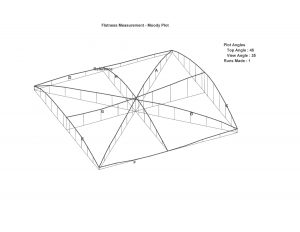
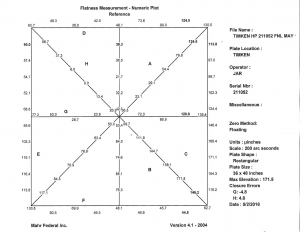
Routine surface plate calibration is necessary to ensure flatness and repeatability over time. The precision measurement group at Cross is ISO 17025 accredited for calibration of surface plate flatness and repeatability. We utilize the Mahr Surface Plate Certification System featuring:
- Moody and Profile Analysis,
- Isometric or Numeric plots,
- Multiple Run Average, and
- Automatic Grading According to Industry Standards.
The Mahr Computer Assisted Model determines any angular or linear deviation from absolute level, and is ideally suited for highly precise profiling of surface plates.
Intervals between calibrations will vary depending on the frequency of use, the environmental conditions where the plate is located, and the specific quality requirements of your company. Properly maintaining your surface plate may allow for longer intervals between each calibration, helps you avoid the added cost of relapping, and most importantly ensures the measurements you obtain on the plate are as accurate as possible. Although surface plates appear robust, they are precision instruments and should be treated as such. Here are some things to consider regarding care of your surface plates:
- Keep the plate clean, and if possible cover it when it is not in use
- Nothing should be placed on the plate other than gages or pieces to be measured.
- Don’t use the same spot on the plate every time.
- If possible, rotate the plate periodically.
- Respect the load limit of your plate
Precision Granite Base Can Improve Machine Tool Performances
Requirements are constantly increasing in mechanical engineering in general and in machine tool construction in particular. Achieving maximum precision and performance values without increasing costs are constant challenges to being competitive. The machine tool bed is a decisive factor here. Therefore, more and more machine tool manufacturers are relying on granite. Due to its physical parameters, it offers clear advantages that cannot be achieved with steel or polymer concrete.
Granite is a so-called volcanic deep rock and has a very dense and homogeneous structure with an extremely low coefficient of expansion, low thermal conductivity and high vibration damping.
Below you will discover why the common opinion that granite is mainly only suitable as machine base for high-end coordinate measuring machines is long outdated and why this natural material as a machine tool base is a very advantageous alternative to steel or cast iron even for high-precision machine tools.
We can manufacture granite components for dynamic motion, granite components for linear motors, granite components for ndt, granite components for xray, granite components for cmm, granite components for cnc, granite precision for laser, granite components for aerospace, granite components for precision stages...
High Added Value Without Additional Costs
The increasing use of granite in mechanical engineering is not so much due to the massive increase in the price of steel. Rather, it is because the added value for the machine tool achieved with a machine bed made of granite is possible at very little or no extra cost. This is proven by cost comparisons of well-known machine tool manufacturers in Germany and Europe.
The considerable gain in thermodynamic stability, vibration damping and long-term precision made possible by granite cannot be achieved with a cast iron or steel bed, or only at relatively high cost. For example, thermal errors can account for up to 75% of the total error of a machine, with compensation often attempted for by software – with moderate success. Due to its low thermal conductivity, granite is the better foundation for long-term precision.
With a tolerance of 1 μm, granite easily meets the flatness requirements according to DIN 876 for the degree of accuracy 00. With a value of 6 on the hardness scale 1 to 10, it is extremely hard, and with its specific weight of 2.8g/cm³ it almost reaches the value of aluminium. This also results in additional advantages such as higher feed rates, higher axis accelerations and an extension of the tool life for cutting machine tools. Thus, the change from a cast bed to a granite machine bed moves the machine tool in question into the high-end class in terms of precision and performance – at no extra cost.
Granite’s Improved Ecological Footprint
In contrast to materials such as steel or cast iron, natural stone does not have to be produced with a great deal of energy and using additives. Only relatively small amounts of energy are required for quarrying and surface treatment. This results in a superior ecological footprint, which even at the end of a machine’s life surpasses that of steel as a material. The granite bed can be the basis for a new machine or be used for completely different purposes such as shredding for road construction.
Nor are there any shortages of resources for granite. It is a deep rock formed from magma within the earth’s crust. It has ‘matured’ for millions of years and is available in very large quantities as a natural resource on almost all continents, including all of Europe.
Conclusion: The numerous demonstrable advantages of granite compared to steel or cast iron justify the increasing willingness of mechanical engineers to use this natural material as a foundation for high-precision, high-performance machine tools. Detailed information about granite properties, which are advantageous for machine tools and mechanical engineering, can be found in this further article.
A repeat measurement is a measurement of local flatness areas. The Repeat Measurement specification states that a measurement taken anywhere on the surface of a plate will repeat within the stated tolerance. Controlling local area flatness tighter than overall flatness guarantees a gradual change in surface flatness profile thereby minimizing local errors.
Most manufacturers, including imported brands, adhere to the Federal Specification of overall flatness tolerances but many overlook the repeat measurements. Many of the low value or budget plates available in the market today will not guarantee repeat measurements. A manufacturer who does not guarantee repeat measurements is NOT producing plates that meet the requirements of ASME B89.3.7-2013 or Federal Specification GGG-P-463c, or DIN 876, GB, JJS...
Both are critical to ensure a precision surface for accurate measurements. Flatness specification alone is not sufficient to guarantee measurement accuracy. Take as an example, a 36 X 48 Inspection Grade A surface plate, which meets ONLY the flatness specification of .000300". If the piece being checked bridges several peaks, and the gage being used is in a low spot, the measurement error could be the full tolerance in one area, 000300"! Actually, it can be much higher if the gage is resting on the slope of an incline.
Errors of .000600"-.000800" are possible, depending upon the severity of the slope, and the arm length of the gage being used. If this plate had a Repeat Measurement specification of .000050"F.I.R. then the measurement error would be less than .000050" regardless of where the measurement is taken on the plate. Another problem, which usually arises when an untrained technician attempts to resurface a plate on-site, is the use of Repeat Measurements alone to certify a plate.
The instruments that are used to verify repeatability are NOT designed to check overall flatness. When set to zero on a perfectly curved surface, they will continue to read zero, whether that surface is perfectly flat or perfectly concave or convex 1/2"! They simply verify the uniformity of the surface, not the flatness. Only a plate that meets both the flatness specification AND the repeat measurement specification truly meets the requirements of ASME B89.3.7-2013 or Federal Specification GGG-P-463c.
Ask us about or flatness specification and repeat measurement promise by calling +86 19969991659 or emailing INFO@ZHHIMG.COM
Yes, but they can only be guaranteed for a specific vertical temperature gradient. The effects of thermal expansion on the plate could easily cause a change in accuracy greater than the tolerance if there is a change in the gradient. In some cases, if the tolerance is tight enough, the heat absorbed from overhead lighting can cause enough of a gradient change over several hours.
Granite has a coefficient of thermal expansion of approximately .0000035 inches per inch per 1°F. As an example: A 36" x 48" x 8" surface plate has an accuracy of .000075" (1/2 of Grade AA) at a gradient of 0°F, the top and bottom are the same temperature. If the top of the plate warms up to the point where it is 1°F warmer than the bottom, the accuracy would change to .000275" convex ! Therefore, ordering a plate with a tolerance tighter than Laboratory Grade AA should only be considered if there is adequate climate control.
A surface plate should be supported at 3 points, ideally located 20% of the length in from the ends of the plate. Two supports should be located 20% of the width in from the long sides, and the remaining support should be centered. Only 3 points can rest solidly on anything but a precision surface.
The plate should be supported at these points during production, and it should be supported only at these three points while in use. Attempting to support the plate at more than three points will cause the plate to receive its support from various combinations of three points, which will not be the same 3 points on which it was supported during production. This will introduce errors as the plate deflects to conform to the new support arrangement. All zhhimg steel stands have support beams designed to line up with the proper support points.
If the plate is properly supported, precise leveling is only necessary if your application calls for it. Leveling is not necessary to maintain the accuracy of a properly supported plate.
Why Choose Granite for Machine Bases and Metrology Components?
The answer is 'yes' for almost every application. The advantages of granite include: No rust or corrosion, almost immune to warping, no compensating hump when nicked, longer wear life, smoother action, greater precision, virtually non-magnetic, low co-efficient of thermal expansion, and low maintenance cost.
Granite is a type of igneous rock quarried for its extreme strength, density, durability, and resistance to corrosion. But granite is also very versatile– it’s not just for squares and rectangles! In fact, Starrett Tru-Stone confidently works with granite components engineered in shapes, angles, and curves of all variations on a regular basis—with excellent outcomes.
Through our state of the art processing, cut surfaces can be exceptionally flat. These qualities make granite the ideal material to create custom-size and custom-design machine bases and metrology components. Granite is:
machineable
precisely flat when cut and finished
rust resistant
durable
long lasting
Granite components are also easy to clean. When creating custom designs, be sure to choose granite for its superior benefits.
STANDARDS / HIGH WEAR APPLICATIONS
The granite utilized by ZhongHui for our standard surface plate products has high quartz content, which provides greater resistance to wear and damage. Our Superior Black and Crystal Pink colors have low water absorption rates, minimizing the possibility of your precision gages rusting while setting on the plates. The colors of granite offered by ZhongHui result in less glare, which means less eyestrain for individuals using the plates. We have chosen our granite types while considering thermal expansion in an effort to keep this aspect minimal.
CUSTOM APPLICATIONS
When your application calls for a plate with custom shapes, threaded inserts, slots or other machining, you’ll want to select a material like Black Diabase. This natural material offers superior stiffness, excellent vibration dampening, and improved machinability.
Yes, if they are not too badly worn. Our factory setting and equipment allow the optimum conditions for proper plate calibration and rework if necessary. Generally, if a plate is within .001" of the required tolerance, it can be resurfaced on-site. If a plate is worn to the point where it is more than .001" out of tolerance, or if it is badly pitted or nicked, then it will need to be sent to the factory for grinding prior to relapping.
Great care should be exercised in selecting an on-site calibration and resurfacing technician. We urge you to use caution in selecting your calibration service. Ask for accreditation and verify the equipment that the technician will use has a National Inspection Institution traceable calibration. It takes many years to learn how to properly lap precision granite.
ZhongHui provides quick turn-around on calibrations performed in our factory. Send your plates in for calibration if possible. Your quality and reputation depend on the accuracy of your measurement instruments including surface plates!
Our black surface plates have a significantly higher density and are up to three times as stiff. Therefore, a plate made of the black does not need to be as thick as a granite plate of the same size to have equal or greater resistance to deflection. Reduced thickness means less weight and lower shipping costs.
Beware of others who use lower quality black granite in the same thickness. As stated above, properties of granite, like wood or metal, vary by material and color, and is not an accurate predictor of stiffness, hardness, or wear resistance. In fact, many types of black granite and diabase are very soft and not suitable for surface plate applications.
No. The specialized equipment and training necessary to rework these items requires that they be returned to the factory for calibration and rework.
Yes. Ceramic and granite have similar characteristics, and the methods used to calibrate and lap granite can be used with ceramic items as well. Ceramics are more difficult to lap than granite resulting in a higher cost.
Yes, provided that the inserts are recessed below the surface. If steel inserts are flush with, or above the surface plane, they must be spot-faced down before the plate can be lapped. If required, we can provide that service.
Yes. Steel inserts with the desired thread (English or metric) can be epoxy bonded into the plate at the desired locations. ZhongHui uses CNC machines to provide the tightest insert locations within +/- 0.005”. For less critical inserts, our locational tolerance for threaded inserts is ±.060". Other options include steel T-Bars and dovetail slots machined directly into the granite.
Inserts that are properly bonded using high strength epoxy and good workmanship will withstand a great deal of torsional and shear force. In a recent test, using 3/8"-16 threaded inserts, an independent testing laboratory measured the force required to pull an epoxy-bonded insert from a surface plate. Ten plates were tested. Out of these ten, in nine cases, the granite fractured first. The average load at the point of failure was 10,020 lbs. for gray granite and 12,310 lbs. for black. In the single case where an insert pulled free of the plate, the load at the point of failure was 12,990 lbs.! If a work piece forms a bridge across the insert and extreme torque is applied, it is possible to generate enough force to fracture the granite. Partially for this reason, ZhongHui gives guidelines for the maximum safe torque that can be applied the epoxy bonded inserts: https://www.zhhimg.com/standard-thread-inserts-product/
Yes, but only at our factory. At our plant, we can restore almost any plate to 'like-new' condition, usually for less than half the cost of replacing it. Damaged edges can be cosmetically patched, deep grooves, nicks, and pits can be ground out, and the attached supports can be replaced. In addition, we can modify your plate to increase its versatility by adding solid or threaded steel inserts and cutting slots or clamping lips, per your specifications.
Why Choose Granite?
Granite is a type of igneous rock formed in the Earth millions of years ago. The composition of igneous rock contained many minerals such as quartz that is extremely hard and wear-resistant. In addition to hardness and wear resistance granite has approximately half the coefficient of expansion as cast iron. As its volumetric weight is approximately one third that of cast iron, granite is easier to manoeuvre.
For machine bases and metrology components, black granite is the colour most used. Black granite has a higher percentage of quartz than other colours and is, therefore, the hardest wearing.
Granite is cost-effective, and cut surfaces can be exceptionally flat. Not only can it be hand lapped to achieve extremes of accuracy, but re-conditioning can be performed without moving the plate or table off-site. It is entirely a hand lapping operation and generally costs much less than re-conditioning a cast iron alternative.
These qualities make granite the ideal material to create custom-size and custom-design machine bases and metrology components such as the granite surface plate.
ZhongHui produces bespoke granite products that are created to support specific measurement requirements. These bespoke items vary from straight edges to tri squares. Due to the versatile nature of granite, the components can be produced to any size required; they are hard wearing and long-lasting.
Advantages of Granite Surface Plates
The importance of measuring on an even surface was established by British inventor Henry Maudsley in the 1800s. As a machine tool innovator, he determined that consistent production of parts required a solid surface for reliable measurements.
The industrial revolution created a demand for measuring surfaces, so engineering company Crown Windley created manufacturing standards. The standards for surface plates were first set by Crown in 1904 using metal. As the demand and cost for metal increased, alternative materials for the measuring surface were investigated.
In America, monument creator Wallace Herman established that black granite was an excellent surface plate material alternative to metal. As granite is non-magnetic and doesn’t rust, it soon became the preferred measuring surface.
A granite surface plate is an essential investment for laboratories and test facilities. A granite surface plate of 600 x 600 mm can be mounted on a support stand. The stands provide a working height of 34” (0.86m) with five adjustable points for levelling.
For reliable and consistent measurement results, a granite surface plate is crucial. As the surface is a smooth and stable plane, it enables instruments to be carefully manipulated.
The main advantages of granite surface plates are:
• Non-reflective
• Resistant to chemicals and corrosion
• Low coefficient of expansion compared with cart iron so less affected by temperature change
• Naturally rigid and hard-wearing
• The plane of the surface is unaffected if scratched
• Will not rust
• Non-magnetic
• Easy to clean and maintain
• Calibration and resurfacing can be done onsite
• Suitable for drilling for threaded support inserts
• High vibration damping
For many shops, inspection rooms and laboratories, precision granite surface plates are relied on as the basis for accurate measurement. Because every linear measurement depends on an accurate reference surface from which final dimensions are taken, surface plates provide the best reference plane for work inspection and layout prior to machining. They also are ideal bases for making height measurements and gaging surfaces. Further, a high degree of flatness, stability, overall quality and workmanship make them a good choice for mounting sophisticated mechanical, electronic and optical gaging systems. For any of these measurement processes, it is imperative to keep surface plates calibrated.
Repeat Measurements and Flatness
Both flatness and repeat measurements are critical to ensure a precision surface. Flatness can be considered as all points on the surface being contained within two parallel planes, the base plane and the roof plane. The measurement of distance between the planes is the overall flatness of the surface. This flatness measurement commonly carries a tolerance and may include a grade designation.
The flatness tolerances for three standard grades are defined in the federal specification as determined by the following formula:
Laboratory Grade AA = (40 + diagonal² / 25) x 0.000001 inch (unilateral)
Inspection Grade A = Laboratory Grade AA x 2
Tool Room Grade B = Laboratory Grade AA x 4
In addition to flatness, repeatability must be ensured. A repeat measurement is a measurement of local flatness areas. It is a measurement taken anywhere on the surface of a plate that will repeat within the stated tolerance. Controlling local area flatness to a tighter tolerance than overall flatness guarantees a gradual change in surface flatness profile, thereby minimizing local errors.
To ensure a surface plate meets both the flatness and repeat measurement specifications, manufacturers of granite surface plates should use Federal Specification GGG-P-463c as a basis for their specifications. This standard addresses repeat measurement accuracy, material properties of surface plate granites, surface finish, support point location, stiffness, acceptable methods of inspection and installation of threaded inserts.
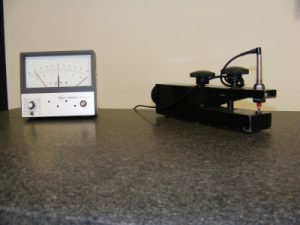
Before a surface plate has worn beyond specification for overall flatness, it will show worn or wavy posts. Monthly inspection for repeat measurement errors using a repeat reading gage will identify wear spots. A repeat reading gage is a high-precision instrument that detects local error and can be displayed on a high magnification electronic amplifier.
Checking Plate Accuracy
By following a few simple guidelines, an investment in a granite surface plate should last for many years. Depending on plate usage, shop environment and required accuracy, frequency of checking the surface plate accuracy varies. A general rule of thumb is for a new plate to receive a full recalibration within one year of purchase. If the plate is used frequently, it is advisable to shorten this interval to six months.
Before a surface plate has worn beyond specification for overall flatness, it will show worn or wavy posts. Monthly inspection for repeat measurement errors using a repeat reading gage will identify wear spots. A repeat reading gage is a high-precision instrument that detects local error and can be displayed on a high magnification electronic amplifier.
An effective inspection program should include regular checks with an autocollimator, providing actual calibration of overall flatness traceable to National Institute of Standards and Technology (NIST). Comprehensive calibration by the manufacturer or an independent company is necessary from time to time.
Variations Between Calibrations
In some cases, there are variations between surface plate calibrations. Sometimes factors such as surface change resulting from wear, incorrect use of inspection equipment or use of noncalibrated equipment can account for these variations. The two most common factors, however, are temperature and support.
One of the most important variables is temperature. For instance, the surface might have been washed with a hot or cold solution prior to calibration and not allowed sufficient time to normalize. Other causes of temperature change include drafts of cold or hot air, direct sunlight, overhead lighting or other sources of radiant heat on the surface of the plate.
There also can be variations in the vertical temperature gradient between winter and summer. In some cases, the plate is not allowed sufficient time to normalize after shipment. It is a good idea to record the vertical gradient temperature at the time the calibration is performed.
Another common cause for calibration variation is a plate that is improperly supported. A surface plate should be supported at three points, ideally located 20% of the length in from the ends of the plate. Two supports should be located 20% of the width in from the long sides, and the remaining support should be centered.
Only three points can rest solidly on anything but a precision surface. Attempting to support the plate at more than three points will cause the plate to receive its support from various combinations of three points, which will not be the same three points on which it was supported during production. This will introduce errors as the plate deflects to conform to the new support arrangement. Consider using steel stands with support beams designed to line up with the proper support points. Stands for this purpose are generally available from the surface plate manufacturer.
If the plate is properly supported, precise leveling is only necessary if an application specifies it. Leveling is not necessary to maintain the accuracy of a properly supported plate.
It is important to keep the plate clean. Airborne abrasive dust is usually the greatest source of wear and tear on a plate, as it tends to embed in workpieces and the contact surfaces of gages. Cover plates to protect them from dust and damage. Wear life can be extended by covering the plate when not in use.
Extend Plate Life
Following a few guidelines will reduce wear on a granite surface plate and ultimately, extend its life.
First, it is important to keep the plate clean. Airborne abrasive dust is usually the greatest source of wear and tear on a plate, as it tends to embed in workpieces and the contact surfaces of gages.
It also is important to cover plates to protect it from dust and damage. Wear life can be extended by covering the plate when not in use.
Rotate the plate periodically so that a single area does not receive excessive use. Also, it is recommended to replace steel contact pads on gaging with carbide pads.
Avoid setting food or soft drinks on the plate. Many soft drinks contain either carbonic or phosphoric acid, which can dissolve the softer minerals and leave small pits in the surface.
Where to Relap
When a granite surface plate needs re-surfacing, consider whether to have this service performed on-site or at the calibration facility. It is always preferable to have the plate relapped at the factory or a dedicated facility. If, however, the plate is not too badly worn, generally within 0.001 inch of the required tolerance, it can be resurfaced on-site. If a plate is worn to the point where it is more than 0.001 inch out of tolerance, or if it is badly pitted or nicked, then it should be sent to the factory for grinding prior to relapping.
A calibration facility has the equipment and factory setting providing the optimum conditions for proper plate calibration and rework if necessary.
Great care should be exercised in selecting an on-site calibration and resurfacing technician. Ask for accreditation and verify the equipment that the technician will use has a NIST-traceable calibration. Experience also is an important factor, as it takes many years to learn how to correctly lap precision granite.
Critical measurements start with a precision granite surface plate as a baseline. By ensuring a reliable reference by using a properly calibrated surface plate, manufacturers have one of the essential tools for reliable measurements and better quality parts.
Checklist for Calibration Variations
- The surface was washed with a hot or cold solution prior to calibration and was not allowed sufficient time to normalize.
- The plate is improperly supported.
- Temperature change.
- Drafts.
- Direct sunlight or other radiant heat on the surface of the plate. Be sure that overhead lighting is not heating the surface.
- Variations in the vertical temperature gradient between winter and summer. If at all possible, know the vertical gradient temperature at the time the calibration is performed.
- Plate not allowed sufficient time to normalize after shipment.
- Improper use of inspection equipment or use of noncalibrated equipment.
- Surface change resulting from wear.
Tech Tips
Because every linear measurement depends on an accurate reference surface from which final dimensions are taken, surface plates provide the best reference plane for work inspection and layout prior to machining.
Controlling local area flatness to a tighter tolerance than overall flatness guarantees a gradual change in surface flatness profile, thereby minimizing local errors.